
Finding ways to earn money online has become easier than ever. Finding opportunities that are truly trustworthy can still be difficult.
Every day people see ads that promise hundreds of dollars for a few minutes of work guaranteed income without experience or instant payments for tasks. Unfortunately many of these offers are unrealistic. Are designed to collect personal information, fees or account details.
The good news is that there are legit online jobs that allow beginners to earn real money online using skills, time and consistent effort. These opportunities can include freelance writing, virtual assistance, customer support, online tutoring, data entry, microtasks, graphic design, social media work, website testing and reviewing products or services where permitted.
The key is knowing how to separate opportunities, from scams. This guide explains how beginners can safely search for online jobs evaluate opportunities avoid common mistakes and gradually build a reliable source of online income.
What Are Positive Reviews?
Positive reviews are comments from customers who had an experience with a business. These reviews show that the customer was happy with what they got. They might say things about how good the product is or how kind and quick the customer support team was. A customer could also mention delivery or how easy it was to place an order. People often praise service or how much value they felt they received.
For instance someone might say that a company answered their questions away or delivered their package on time. Another person might share that a problem was fixed quickly and smoothly. These kinds of experiences matter a lot.
When other people read these reviews they feel more confident about trying the business. Real stories from customers help them see what life is like after buying. It makes the business seem trustworthy.
Positive reviews also help the business itself. When customers keep saying things about the same things—, like fast response times or an easy checkout process—it shows that those parts of the business are working well. That means the business knows which areas to keep strong and focus on.
What Are Negative Reviews?
Negative reviews talk about times when customers felt upset, upset or unhappy with some part of their experience.
Common problems customers mention can include things like getting their order having trouble communicating, not understanding directions having issues with the product getting extra charges or getting help too slowly.
Companies usually like to hear things but bad reviews don't always mean something bad is happening. A real complaint can show a problem that the company might not have seen.
For example if a lot of customers say that the checkout page is hard to use the company can look into it and make things better for people.
The important thing is to handle bad feedback in a proper way instead of not paying attention to it or getting upset, about it.
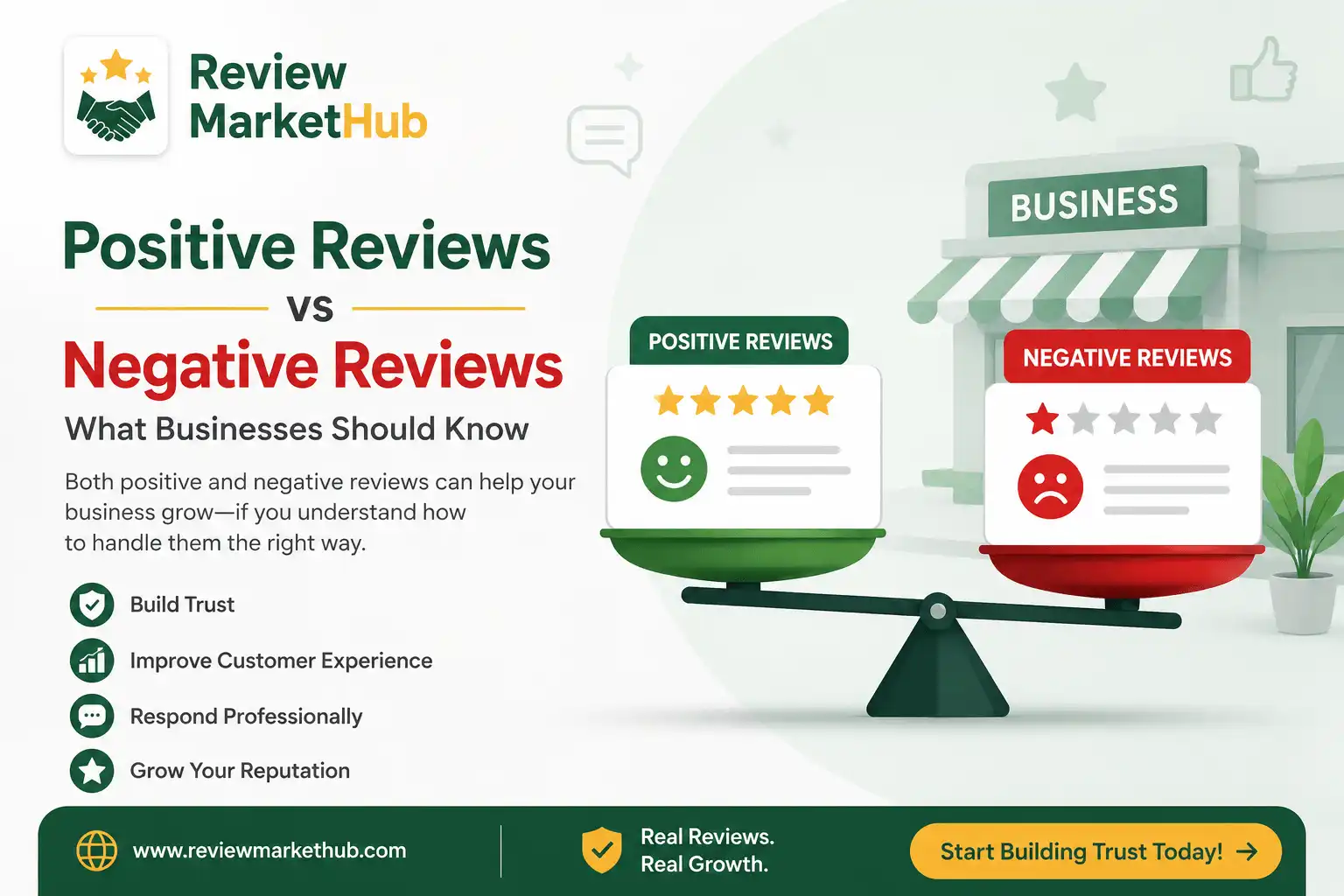
Positive vs Negative Reviews: Why the Difference Matters
Understanding reviews and negative reviews helps businesses make better decisions about customer service and reputation management.
Positive reviews mainly highlight strengths. Positive reviews show what customers appreciate. Can help reinforce trust, among potential buyers.
Negative reviews often highlight weaknesses or unmet expectations. Negative reviews can affect how people view a company. Negative reviews also provide some of the most useful feedback a business receives.
A healthy review profile may naturally contain customer opinions. Not every customer will have the same experience and businesses should avoid trying to create an unrealistic image of perfection.
Instead companies should focus on delivering service encouraging honest feedback and responding professionally when customers raise concerns.
How Businesses Should Handle Positive Reviews
When a customer takes time to share an experience I see that businesses can acknowledge the feedback with a short and genuine response. That makes me feel valued. A simple thank‑you can show that the company values customers and that makes me feel appreciated.
Businesses can also study feedback to identify patterns. If many customers praise a service, employee, feature or process businesses should consider how to maintain or expand that strength.
However businesses should never create reviews or pressure customers to leave misleading feedback because that would hurt trust. Building reputation, through customer experiences is much more sustainable and that is what I value.
How Businesses Should Handle Negative Reviews
Negative reviews require an professional approach. Negative reviews should be treated with calmness and professionalism. The first step is to understand the customers concern. The first step is to avoid replying or arguing publicly.
A helpful reply usually says the problem is seen talks politely and gives a way to keep the talk going when needed.
For example if an order problem involves account details I would ask the customer to contact support privately instead of sharing personal information publicly.
Businesses should also look into repeated complaints inside the company. One negative review can be a case but many similar complaints can show a bigger operational problem. Fixing the root cause is more valuable, than writing a good reply.
Common Mistakes Businesses Should Avoid
A common mistake is to ignore reviews completely. When a business stays silent customers may feel that their concerns are not taken seriously.
Another mistake is to respond with emotion. Even if a negative review seems unfair a public argument can hurt the business image more than the complaint.
Businesses should also avoid copying the same reply, for every review. Generic replies can look automated. May not address the real concern of the customer.
Importantly companies should never purchase fake reviews create false customer experiences or try to manipulate ratings. Genuine reputation building takes time. It creates much stronger trust.
Finding the Right Balance
The goal should not be to eliminate every comment. Instead businesses should aim to create good customer experiences and stay open to honest feedback. Positive reviews can show what is working. Negative reviews can show what needs attention.
When both positive reviews and negative reviews are analyzed together businesses gain a complete understanding of their reputation.
This balanced approach to reviews, versus negative reviews allows companies to learn from customers instead of focusing only on star ratings.
Login or create account to leave comments
Comments (0)