
Why Responding to Customer Reviews Matters
Reviews are not only conversations between your business and existing customers. Potential customers may also read them before deciding whether to contact, visit, or purchase from your business.
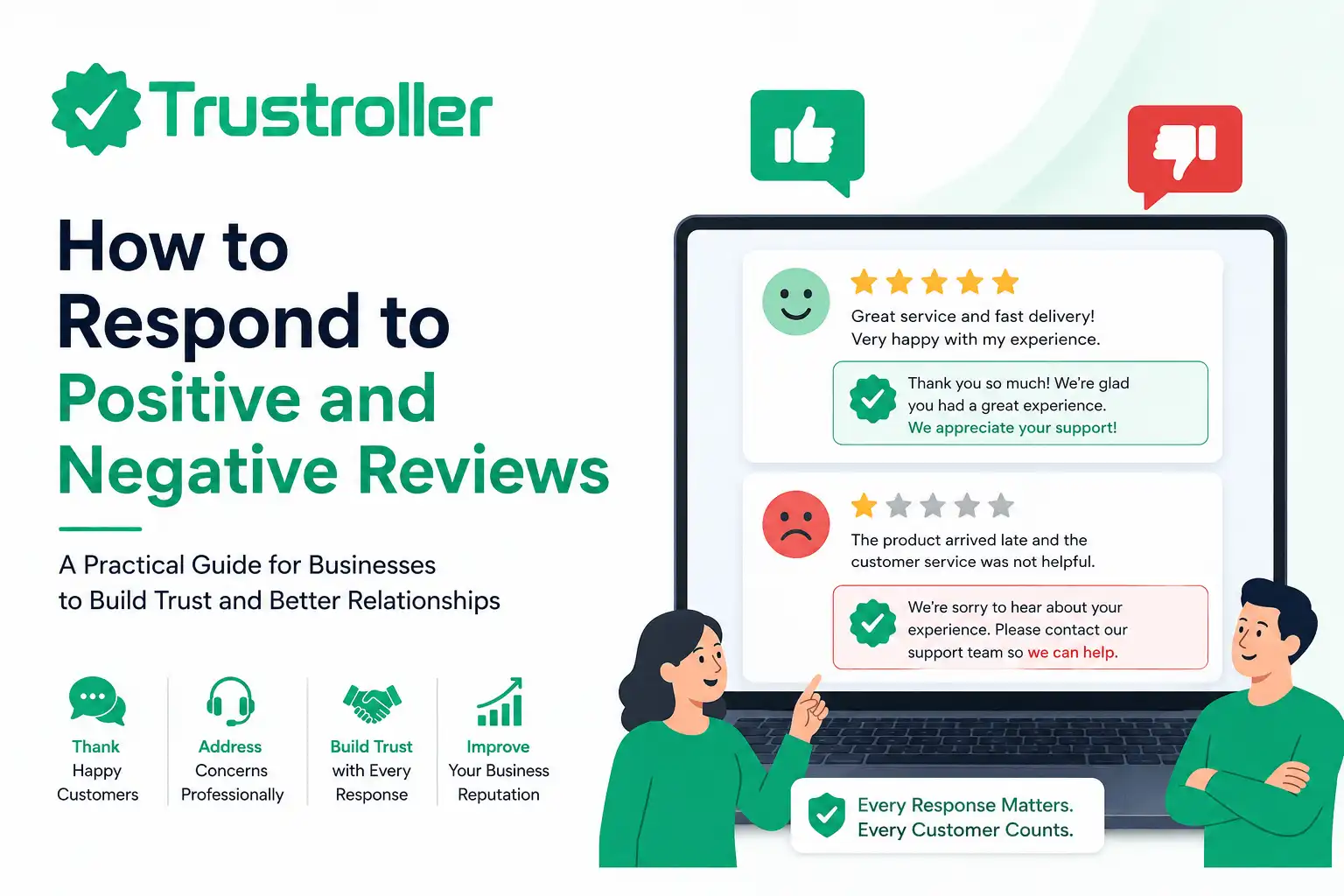
When someone sees a positive review followed by a thoughtful business response, it shows that the company appreciates its customers. Similarly, when someone sees a complaint followed by a calm and helpful reply, they can see how the business approaches problems.
Responding also gives businesses useful information. If several customers repeatedly mention slow support, difficult checkout, unclear instructions, or another issue, that feedback may identify an area that deserves attention.
Knowing how to respond to reviews therefore involves more than protecting your reputation. It means listening, communicating, and using genuine customer feedback to improve the overall customer experience.
Step-by-Step Guide: How to Respond to Reviews
Step 1: Read the Entire Review Carefully
Before writing a response, read the complete review and identify exactly what the customer is saying.
For positive feedback, notice what the customer appreciated. Maybe they liked your customer support, fast service, product quality, easy ordering process, or communication.
For negative feedback, identify the specific complaint rather than focusing only on the star rating. Understanding the main point helps you provide a relevant response instead of using a generic message.
Step 2: Respond to Positive Reviews Personally
Customers who take time to leave positive feedback deserve a genuine thank-you.
A simple response could be:
“Thank you for sharing your experience. We are happy to hear that you were satisfied with our service. We really appreciate your feedback and look forward to serving you again.”
Whenever possible, mention something related to the customer's review.
For example, if the customer praised quick support, you could say:
“Thank you for your feedback. We are glad our support team was able to assist you quickly.”
Personalized responses usually feel more natural than repeatedly posting the same sentence under every review.
Step 3: Stay Calm When Responding to Negative Reviews
Negative reviews can sometimes be frustrating, especially when you disagree with part of the customer's description. However, replying emotionally can make the situation worse.
Avoid insults, accusations, sarcasm, or aggressive language.
Instead, acknowledge the customer's concern.
For example:
“Thank you for bringing this to our attention. We are sorry to hear that your experience did not meet your expectations. We would like to understand what happened and see how we can help.”
You do not need to admit something that did not happen. The goal is to acknowledge the customer's experience and communicate professionally.
Step 4: Address the Specific Problem
Generic apologies are rarely enough when a customer describes a specific issue.
If the customer says their support request took longer than expected, address that topic. If the complaint concerns an order, transaction, product, or service, focus on that issue.
You might respond:
“Thank you for your feedback regarding the response time. We understand how important timely communication is and appreciate you bringing this experience to our attention.”
If you need personal information to investigate the issue, avoid requesting sensitive details publicly. Instead, direct the customer to your official private support channel.
Step 5: Offer a Reasonable Next Step
A good negative-review response should explain what the customer can do next.
This could include contacting customer support, providing an order reference privately, or continuing the conversation through an official support method.
For example:
“Please contact our support team through our official contact page with your order reference so we can review the situation.”
Only promise actions that your business can actually provide. Avoid guarantees such as “We will definitely refund you” before reviewing the case.
Step 6: Keep Your Response Short and Clear
A review response usually does not need several long paragraphs.
Customers want to know that you have read their feedback and are willing to address the issue.
A useful structure is:
Acknowledge → Thank → Address → Next Step
For example:
“Thank you for your feedback. We are sorry that you experienced a delay. We would like to review what happened. Please contact our support team with your order details so we can investigate further.”
This approach keeps the conversation professional and easy to understand.
Common Mistakes When Responding to Reviews
Even businesses with good intentions can make mistakes when managing customer feedback.
One common mistake is using exactly the same response for every customer. Repetitive responses may appear automated and make customers feel that their comments were not actually read.
Another mistake is arguing publicly with a negative reviewer. You can politely correct factual misunderstandings when necessary, but long public arguments rarely create a positive impression.
Businesses should also avoid asking customers to remove legitimate negative reviews simply because they are unfavorable. Instead, focus on resolving genuine concerns.
Other mistakes include sharing private customer information, blaming the customer, ignoring complaints, writing overly defensive responses, and offering unrealistic promises.
Most importantly, never create fake positive reviews or encourage dishonest feedback. Building a trustworthy reputation should always be based on genuine customer experiences.
Frequently Asked Questions
Final Thoughts
Understanding how to respond to reviews is an important part of building strong customer relationships and protecting your online reputation. Positive reviews give you an opportunity to appreciate satisfied customers, while negative reviews can help you identify problems, clarify misunderstandings, and improve your service.
Always respond calmly, professionally, and honestly. Avoid arguments, protect customer privacy, and provide a clear next step whenever a customer needs support.
Trustroller can also be useful for growing businesses and established online platforms that want to collect genuine customer feedback and communicate transparently with their audience. Platforms such as APNSender can use Trustroller to build a visible review presence, respond to customer experiences, and strengthen online trust.
Comments (0)