
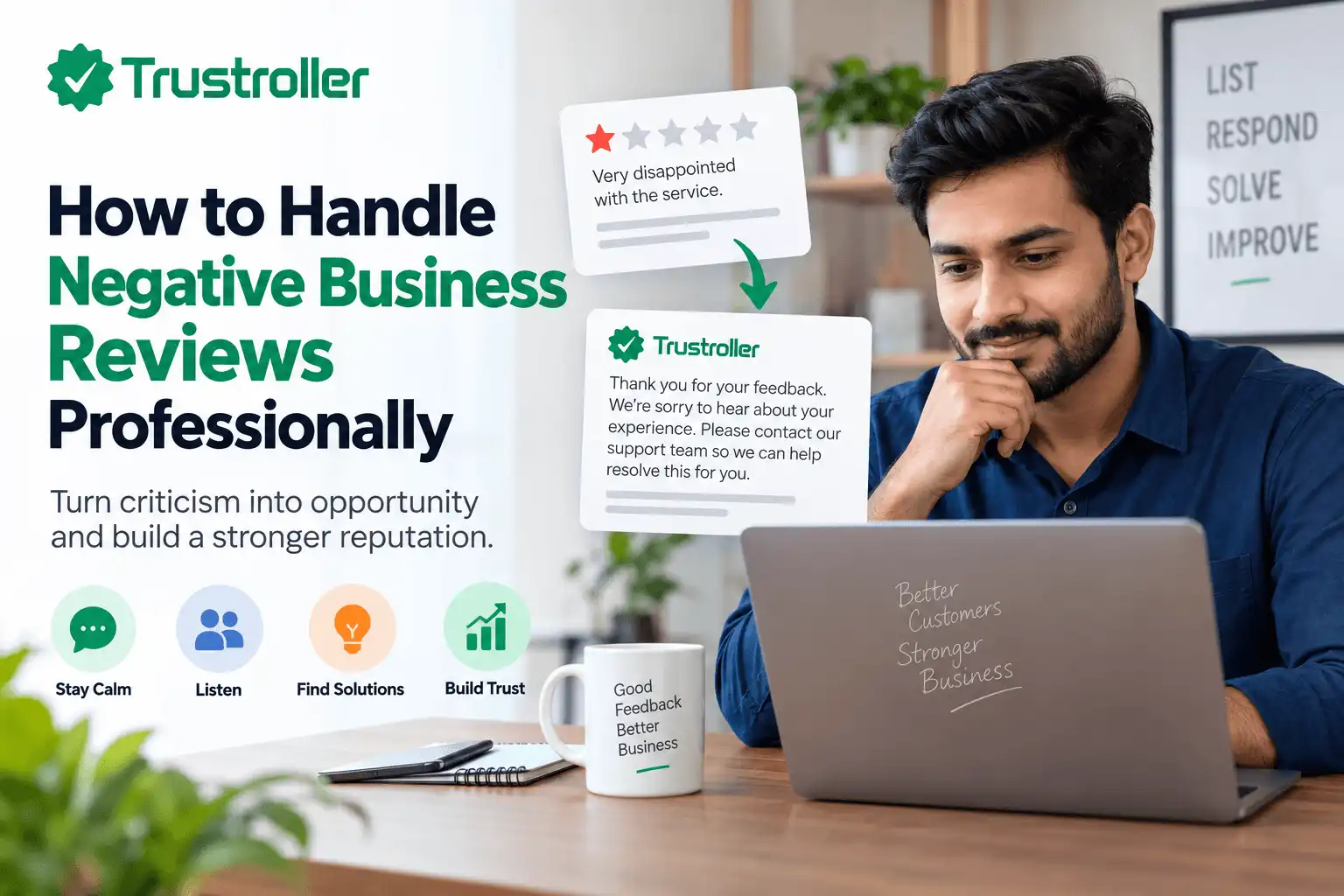
Negative reviews are a normal part of doing business. No matter how carefully you serve customers, there may be times when someone is disappointed with a product, service, delivery, communication, or overall experience.
For many business owners, especially beginners, receiving a negative review can feel frustrating. The first reaction may be to defend the business, argue with the customer, or ignore the review completely. However, these reactions can sometimes make the situation worse.
Learning how to handle negative business reviews professionally can help protect your reputation, show potential customers that you care, and even turn an unhappy customer into a more satisfied one.
The goal is not to remove every criticism. Instead, the goal is to respond calmly, understand the problem, and demonstrate that your business takes customer feedback seriously.
Why Handling Negative Reviews Matters
Online reviews influence how people see a business. Before choosing a company, many customers read both positive and negative feedback to understand what kind of experience they might receive.
Interestingly, a negative review does not always damage your business by itself. What often matters just as much is how you respond.
A professional response can show potential customers that your business:
- Listens to customer concerns
- Takes responsibility when appropriate
- Tries to solve problems
- Communicates respectfully
- Values customer satisfaction
- Is willing to improve
On the other hand, an angry, dismissive, or argumentative response may create a worse impression than the original complaint.
That is why businesses should have a clear process for responding to criticism instead of reacting emotionally.
1. Read the Review Carefully
Before replying, read the entire review carefully.
Try to identify the main reason the customer is unhappy. For example, the complaint might involve:
- Slow delivery
- Poor customer support
- Product quality
- Incorrect information
- Unexpected charges
- A misunderstanding
- Service delays
Do not immediately assume that the customer is wrong.
Even if some details are inaccurate, there may still be a genuine concern behind the review. Understanding the core issue will help you write a more useful response.
If your team handled the customer previously, check internal records, messages, orders, or support conversations before responding.
2. Avoid Responding Emotionally
One of the most important rules when trying to handle negative business reviews is to remain calm.
A negative review may feel unfair, exaggerated, or insulting. However, responding while angry can lead to unnecessary arguments.
Avoid writing things such as:
“You are completely wrong.”
“This never happened.”
“You are lying.”
“You clearly do not understand our service.”
Even when you disagree with the customer, aggressive language usually does not help.
Remember that your response is not only being read by the reviewer. Future customers may also read it.
Your response should therefore represent your business professionally.
3. Acknowledge the Customer's Experience
A good response normally begins by acknowledging the customer's concern.
You do not always need to admit fault, especially if you have not verified what happened. However, you can still recognize that the customer had an unsatisfactory experience.
For example:
“Thank you for sharing your feedback. We are sorry to hear that your experience did not meet your expectations.”
This type of response shows that you are listening without immediately arguing about the details.
Avoid using copy-paste responses for every complaint. Customers can often recognize generic replies.
Whenever possible, mention the specific issue they raised.
4. Apologize When Appropriate
If your business made a mistake, a sincere apology can be very effective.
For example:
“We apologize for the delay in processing your order. This is not the experience we want our customers to have.”
An apology does not need to be long or dramatic.
It should simply acknowledge the inconvenience and show that the business cares about resolving the situation.
Do not make promises you cannot keep. For example, avoid guaranteeing refunds, compensation, or immediate solutions unless your business policies allow them.
5. Explain the Situation Without Making Excuses
Sometimes there is a reasonable explanation for what happened.
For example, a service may have been delayed because of a technical issue, delivery problem, or temporary system interruption.
You can provide context, but avoid turning your response into a long list of excuses.
Instead of saying:
“It wasn't our fault because the courier caused the problem.”
A better approach might be:
“We understand how frustrating the delay was. Our delivery partner experienced an unexpected issue, but we are reviewing the situation to improve communication during similar delays.”
This keeps the focus on the customer rather than shifting blame.
6. Offer a Practical Solution
Whenever possible, tell the customer what they can do next.
Depending on the situation, this could include:
- Contacting customer support
- Providing an order number
- Sending additional details
- Requesting troubleshooting assistance
- Discussing an appropriate resolution privately
For example:
“Please contact our support team with your order details so we can review the issue and see how we can help.”
This shows that your response is not only about protecting your reputation. You are genuinely trying to resolve the customer's concern.
7. Move Sensitive Discussions to a Private Channel
Public review sections are not the best place to discuss private information.
Never ask customers to publicly share sensitive details such as:
- Passwords
- Payment information
- Full account credentials
- Private identification details
- Other confidential information
If more information is required, invite them to continue the conversation through your official customer support channel.
You can still post a short public response so that other readers can see that your business is addressing the situation.
8. Keep Your Response Short and Professional
Most review responses do not need to be several paragraphs long.
A strong response usually contains four simple elements:
- Thank the customer for the feedback.
- Acknowledge the concern.
- Apologize when appropriate.
- Offer a next step.
For example:
“Thank you for your feedback. We are sorry to hear about the delay you experienced. We would like to review what happened and help resolve the issue. Please contact our support team with your order details so we can investigate further.”
It is simple, professional, and solution-focused.
9. Learn From Repeated Complaints
Negative reviews can sometimes reveal problems that a business has not noticed internally.
If several customers complain about the same issue, pay attention.
For example, repeated complaints about:
- Slow responses
- Confusing pricing
- Difficult checkout processes
- Product packaging
- Delivery delays
- Poor instructions
may indicate that something in your business process needs improvement.
Keeping track of recurring review topics can help you identify areas where changes may improve the customer experience.
Negative reviews should therefore be treated not only as criticism but also as useful business feedback.
Common Mistakes to Avoid
When businesses try to handle negative business reviews, several common mistakes can make the situation worse.
Avoid:
- Ignoring every negative review
- Responding while angry
- Arguing publicly with customers
- Copying the same reply everywhere
- Blaming the customer
- Sharing private customer information
- Making unrealistic promises
- Buying fake reviews
- Asking customers to remove criticism before helping them
- Treating every negative review as an attack
Professional communication usually produces a better long-term result.
Frequently Asked Questions
Final Thoughts
Knowing how to handle negative business reviews is an important part of managing an online business reputation.
Negative feedback does not automatically mean your business has failed. What matters is how you respond.
Listen carefully, stay calm, acknowledge genuine concerns, provide useful solutions, and use customer feedback to improve your business.
Professional review management can help potential customers see that your business takes service and accountability seriously.
Comments (0)