
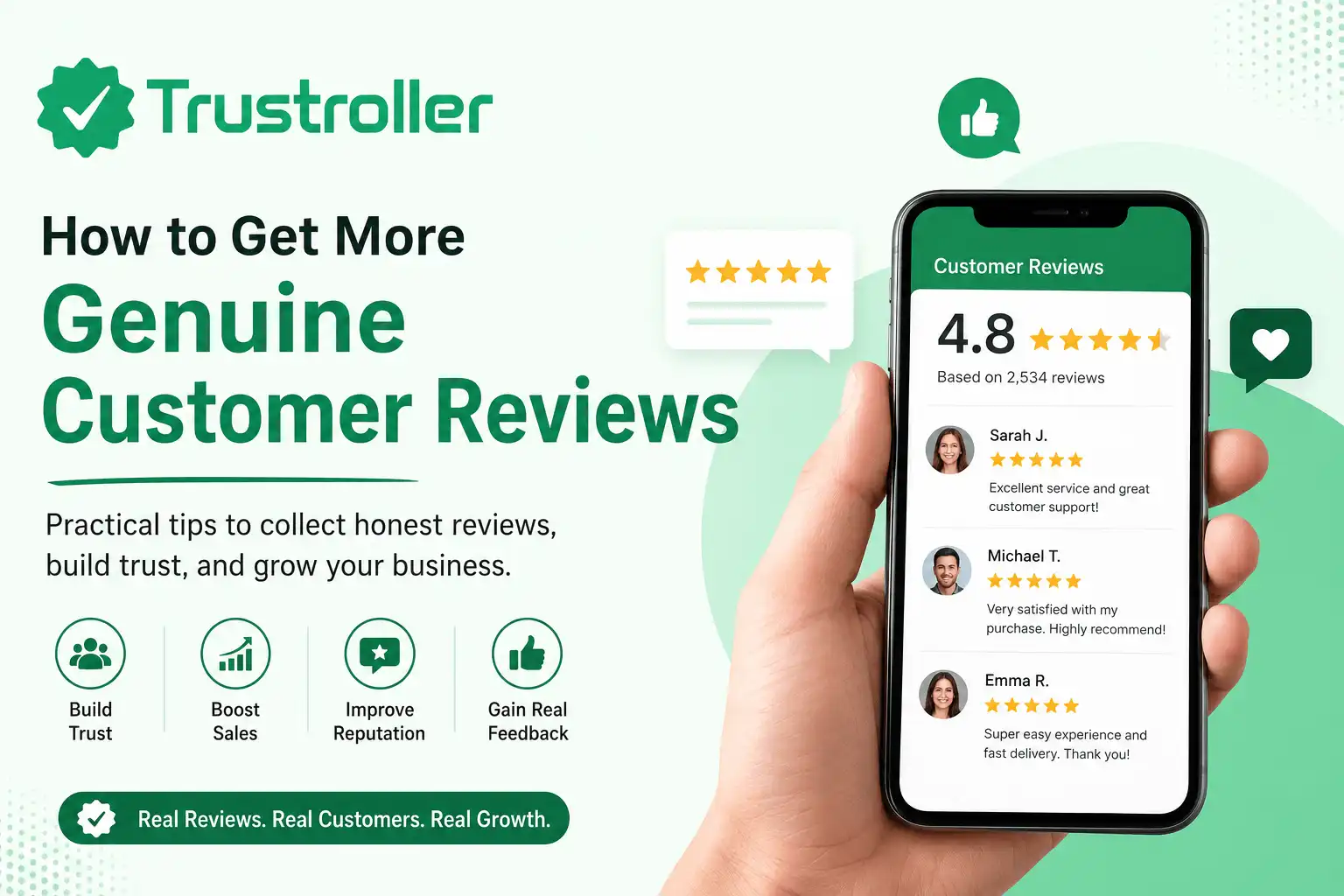
Why Customer Reviews Matter for Your Business
Customer reviews influence how people view your business before they have any direct experience with you. A potential customer may compare several companies offering similar products or services. When one business has helpful, detailed, and authentic reviews, it may appear more trustworthy.
Reviews also provide social proof. Instead of only hearing claims from the business itself, potential buyers can learn from people who have already purchased the product or used the service. This can reduce uncertainty and make customers feel more comfortable before making a decision.
Another major benefit is customer feedback. Reviews can show you what customers appreciate and where your business could improve. If several people praise fast customer service, for example, you know that your support team is doing something well. If customers repeatedly mention a confusing checkout process, you have identified an area that may need improvement.
For local and online businesses, reviews can also strengthen your overall online presence. Search engines and review platforms often use customer feedback as one of many signals when presenting businesses to users. While reviews alone cannot guarantee higher rankings, maintaining an active and trustworthy review profile can support your digital marketing efforts.
Therefore, businesses that want to get more customer reviews should consider review collection part of their long-term customer experience strategy.
1. Deliver an Experience Worth Reviewing
The best way to receive genuine positive reviews is to give customers a genuinely good experience.
Before asking for reviews, examine your product quality, delivery process, communication, support, pricing transparency, and after-sales service. Customers are more likely to share positive feedback when they feel that a business has delivered what it promised.
You do not need to provide a perfect experience every time. What matters is being professional, responsive, and willing to solve problems when they happen.
A customer who experiences a small problem but receives excellent support may sometimes become more loyal than a customer who never needed assistance.
2. Ask Customers Directly
Many happy customers simply do not think about leaving reviews. A polite request can make a major difference.
After completing a successful purchase or service, ask whether the customer would be willing to share their experience. Keep the message short and friendly.
For example, you can say:
“Thank you for choosing us. If you have a moment, we would appreciate your honest feedback about your experience.”
The important word here is honest. You should not ask only for five-star reviews or suggest exactly what customers should write.
Allow customers to express their real opinions.
3. Ask at the Right Time
Timing can strongly affect whether customers respond to a review request.
Avoid asking for feedback before customers have properly experienced your product or service. Instead, choose a moment when customer satisfaction is likely to be fresh in their mind.
For an online store, this might be a few days after delivery. For a service business, it could be immediately after successfully completing the work. For a software company, it may make sense to ask after customers have used the platform long enough to understand its benefits.
Choosing the right moment helps businesses get more customer reviews without repeatedly bothering customers.
4. Make Leaving a Review Easy
Customers are less likely to leave feedback if the process takes too long.
Provide a direct link to your preferred review page whenever possible. Instead of telling customers to search for your company, find your profile, and then locate the review section, take them directly to the appropriate page.
You can include review links in:
- Thank-you emails
- Order confirmation or follow-up emails
- Customer support messages
- Your website
- SMS follow-ups
- Digital receipts
- Social media pages
Keep the number of steps as low as possible.
5. Use Email Follow-Ups
Email is one of the easiest ways to request reviews from existing customers.
A simple follow-up email can thank customers for their purchase and invite them to share feedback. Avoid writing long promotional messages around your review request.
The main purpose should be clear.
You can also automate review-request emails after certain customer actions, such as completing an order. However, automated messages should still sound natural and should not be sent excessively.
One well-timed request is usually better than sending repeated messages.
6. Respond to Existing Reviews
Collecting reviews is only one part of review management. You should also respond to the reviews you already receive.
Thank customers who leave positive feedback. When someone posts a negative review, respond professionally and try to understand the problem.
Do not argue publicly with customers or attack them for criticism.
A professional response shows potential customers that your business listens to feedback and takes customer satisfaction seriously.
Your replies also encourage future customers to leave reviews because they can see that their opinions are being acknowledged.
7. Display Reviews on Your Website
Showing genuine reviews on your website can provide additional motivation for customers to contribute their own experiences.
You can create a testimonials section, customer review page, or review widget. When possible, clearly identify where reviews came from and avoid changing their meaning.
Never create fictional customer names or fake testimonials simply to make your company look more established.
Authenticity is much more valuable than having a large number of questionable reviews.
8. Use Social Media to Encourage Feedback
Social media gives businesses another natural way to communicate with customers.
You can occasionally invite followers who have purchased from you to share their experience. You can also highlight genuine customer feedback, with appropriate permission when necessary.
Avoid turning every social media post into a request for reviews. Review requests should be part of a broader customer relationship rather than constant promotion.
9. Learn From Negative Reviews
Negative feedback is uncomfortable, but it can also be useful.
Instead of focusing only on increasing positive reviews, examine what unhappy customers are saying. Their feedback may reveal problems with shipping, communication, product descriptions, customer support, or other areas.
Fixing repeated problems can improve future customer experiences, which naturally increases the chance of receiving better reviews.
A business that listens, improves, and communicates openly can build stronger long-term trust.
Frequently Asked Questions
Final Thoughts
Learning how to get more customer reviews is not about finding shortcuts or artificially increasing ratings. It is about creating better customer experiences and giving real customers an easy opportunity to share their opinions.
Start with excellent service, ask for feedback at the right time, provide convenient review links, respond professionally, and use customer feedback to continuously improve your business.
Over time, genuine reviews can become a valuable source of trust, social proof, customer insights, and credibility.
Comments (0)