
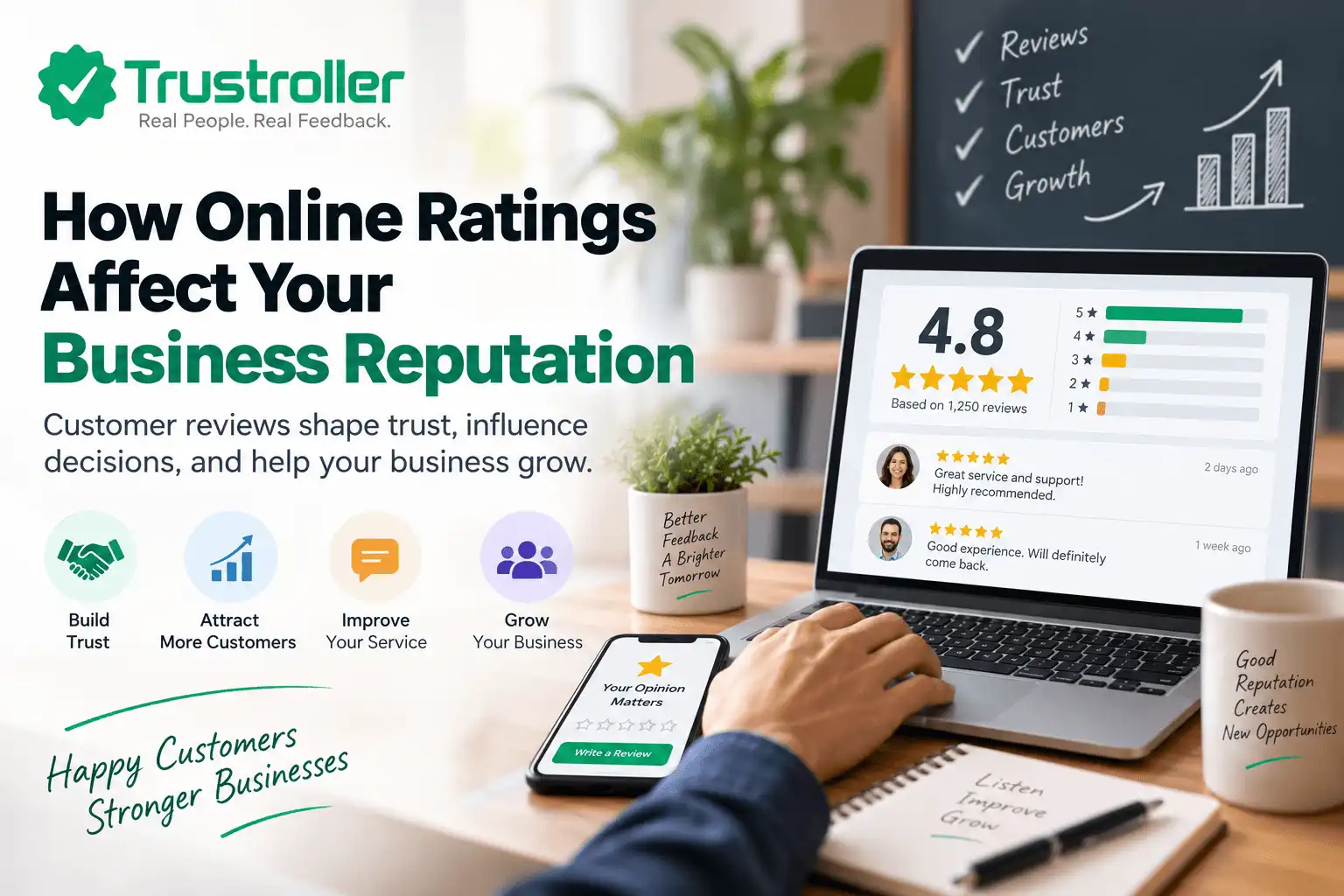
Before a customer comes to your store books your service sends you a message or places an order they might look for information about your business online. While they are searching one of the things they could see is your online ratings. Ratings can show up on review sites, business listings, online marketplaces, social media, search results and other places where people talk about their experiences. A business with ratings and helpful feedback might seem more trustworthy right away.
A business that has very few ratings, old reviews or a lot of negative comments might make new customers think twice. This does not mean every customer decides based on a star rating. Price, quality of products, location, customer service, availability, brand name and personal suggestions can all matter. Online ratings often help shape the first idea someone has about a business before they talk to the company directly. That is why business owners should see ratings as more than a number next to their name. They are part of the picture of the online reputation people see and judge.
A rating only tells part of the story. Customers might check how reviews a business has how recent they are, what specific things people talk about and whether the business answers concerns in a good way. For businesses managing their reputation does not need complicated tools or strong marketing. It starts with giving a customer experience making it easy for real customers to leave honest opinions watching what people say and replying politely when needed.
Sites like TrustRoller can help businesses set up a place where customer experiences and feedback're easier to find. The goal should not be to make a looking page or get rid of every bad comment. Instead the goal is to create an trustworthy reputation that shows real customer experiences. Understanding how online ratings affect your business reputation can then help you make choices, about customer service, communication, handling reviews and growing your brand over time.
Why Online Ratings Matter for Your Business Reputation
Online ratings matter because customers often use them as a way to reduce uncertainty when comparing businesses they have not met before. Imagine someone is looking for a web designer, a restaurant, a store, a repair service, a local professional or a software provider for the first time. The customer may see options that look alike in price and features. Reviews and online ratings give clues from people who have already dealt with those businesses helping the potential customer see what the experience could be like.
A strong online rating backed by recent reviews can build trust while repeated complaints about the same issue can highlight a problem that needs fixing. The total number of ratings also shapes perception. A high score from one or two online ratings offers less context than a similar score from many real customer experiences. Recency matters too because a business can improve or slip over time. Customers may therefore focus more on ratings from recent months instead of old comments written years ago.
Another key point is how a business handles criticism. Getting an online rating does not instantly ruin a reputation. Sometimes a calm and helpful reply shows that the company listens to customers and cares about problems. Businesses should not argue publicly blame customers buy reviews give misleading incentives or try to manipulate online ratings. These actions can harm credibility. Break the rules of review platforms. Instead online ratings should be seen as information, about a business. If many customers say the replies are slow the checkout is confusing delivery is delayed or support is great those patterns help the business spot both spots and strong points.
Over time steady improvement of the customer experience can bring feedback naturally. For a business this approach is very useful because every customer interaction is a chance to learn. Your online rating should be seen as a reflection of customer experiences not as a marketing number that must stay perfect at all times.
Step-by-Step Guide to Managing Online Ratings
Step 1: Find Where Customers Are Rating Your Business
Start by identifying all the places where customers can leave reviews or ratings about your business. Search your business name on Google and check review platforms, business directories, marketplaces, social media pages, and industry-specific websites. If your business has a profile on TrustRoller, include it in your regular monitoring list as well. This first step is important because customers may be discussing your business on platforms you do not check often. Create a simple list of the main websites where your ratings appear so you can monitor them consistently. You do not need to track every website on the internet. Focus on the platforms that are most relevant to your customers and industry.
Step 2: Keep Your Business Information Accurate
Before asking customers for feedback, make sure your business information is correct and up to date. Check your business name, website address, phone number, email, location, opening hours, product details, and service descriptions. Incorrect information can create confusion and may lead to negative customer experiences before a purchase even happens. If customers find different information on different platforms, they may question whether the business is reliable. Review your profiles regularly and update them whenever something changes. Accurate business information helps customers know what to expect and creates a stronger foundation for positive online ratings and genuine feedback.
Step 3: Ask Real Customers for Honest Feedback
Encourage genuine customers to share their experiences after completing a purchase, order, service, or support interaction. You can include a review request in a follow-up email, order confirmation, customer dashboard, invoice, receipt, or support message. Keep the request simple and neutral. Instead of asking customers specifically for a five-star rating, invite them to leave honest feedback about their experience. This gives customers the freedom to share both positive comments and constructive criticism. Avoid buying reviews, creating fake accounts, or offering misleading rewards in exchange for positive ratings. Authentic feedback is much more valuable for building long-term trust.
Step 4: Read the Reviews, Not Just the Star Rating
Do not focus only on your average rating. Take time to read the written reviews because they explain why customers selected a particular score. Look for repeated comments about customer support, delivery speed, product quality, website usability, pricing, communication, or other parts of the customer experience. A single complaint may be an isolated case, but several customers mentioning the same issue may indicate a real problem that deserves attention. Positive comments are also useful because they can show what your business is doing well. Reviewing both positive and negative feedback helps you understand your reputation more clearly.
Step 5: Respond Professionally to Customer Reviews
When appropriate, respond to customer feedback in a polite and professional way. Thank customers for positive comments and acknowledge legitimate concerns raised in negative reviews. Avoid arguing, blaming the customer, or using emotional language. If a complaint involves personal information, account details, payments, or private records, do not discuss those details publicly. Instead, ask the customer to contact your official support channel so the issue can be handled securely. A professional response shows potential customers that your business listens to feedback and takes customer experiences seriously, even when something does not go perfectly.
Step 6: Identify Repeated Problems and Fix Them
Use your online ratings as a source of practical business information. If several customers mention slow replies, confusing payment instructions, delivery delays, unclear pricing, or another repeated issue, investigate the cause. Then make changes where possible. For example, you might improve your FAQ, update product descriptions, simplify your checkout process, train your support team, or provide clearer delivery information. Reputation management should not stop at responding to reviews. The most important part is using customer feedback to improve the actual service. When recurring problems are solved, future customer experiences may improve naturally.
Step 7: Monitor Your Online Ratings Regularly
Create a simple schedule for checking your ratings and reviews. Businesses that receive many reviews may want to monitor them several times a week, while smaller businesses may only need to check weekly or monthly. The important thing is consistency. Regular monitoring helps you notice new complaints, customer questions, unusual rating changes, or positive trends before they are forgotten. You can also keep a basic record of common feedback themes so you can compare them over time. Monitoring does not need to become a complicated daily task. A regular routine is usually enough for most small businesses.
Step 8: Focus on Customer Experience Instead of a Perfect Score
The final step is to avoid becoming obsessed with maintaining a perfect rating. Real businesses can receive both positive and negative reviews, and customers generally understand that not every experience will be identical. Instead of chasing a perfect number, focus on providing reliable service, clear communication, honest information, and helpful customer support. Treat every review as an opportunity to learn something about your customers. Strong online ratings are most valuable when they reflect genuine customer experiences. By consistently improving your service and responding professionally to feedback, you can gradually build a more credible and trustworthy business reputation.
Common Mistakes Businesses Make With Online Ratings
Online ratings matter because customers often use them as a way to reduce uncertainty when comparing businesses they have not met before. Imagine someone is looking for a web designer, a restaurant, a store, a repair service, a local professional or a software provider for the first time. The customer may see options that look alike in price and features. Reviews and online ratings give clues from people who have already dealt with those businesses helping the potential customer see what the experience could be like.
A strong online rating backed by recent reviews can build trust while repeated complaints about the same issue can highlight a problem that needs fixing. The total number of ratings also shapes perception. A high score from one or two online ratings offers less context than a similar score from many real customer experiences. Recency matters too because a business can improve or slip over time. Customers may therefore focus more on ratings from recent months instead of old comments written years ago.
Another key point is how a business handles criticism. Getting an online rating does not instantly ruin a reputation. Sometimes a calm and helpful reply shows that the company listens to customers and cares about problems. Businesses should not argue publicly blame customers buy reviews give misleading incentives or try to manipulate online ratings. These actions can harm credibility. Break the rules of review platforms.
Instead online ratings should be seen as information, about a business. If many customers say the replies are slow the checkout is confusing delivery is delayed or support is great those patterns help the business spot both spots and strong points. Over time steady improvement of the customer experience can bring feedback naturally. For a business this approach is very useful because every customer interaction is a chance to learn. Your online rating should be seen as a reflection of customer experiences not as a marketing number that must stay perfect at all times.
Frequently Asked Questions
1. What are online ratings?
Online ratings are scores that customers give to a business, product, or service based on their experience. They are often shown as stars, numbers, or percentages on review platforms, marketplaces, business directories, and other websites. These ratings give potential customers a quick idea of how previous customers viewed the business.
2. Do online ratings really affect customer decisions?
Yes, online ratings can influence customer decisions, especially when someone is comparing several unfamiliar businesses. However, ratings are usually only one part of the decision. Customers may also consider price, service quality, location, product features, written reviews, recommendations, and the overall reputation of the business.
3. Is a perfect five-star rating necessary for a good reputation?
No. A perfect rating is not necessary to build trust. Many customers understand that real businesses can receive both positive and negative feedback. A balanced profile with genuine reviews, professional responses, and consistent customer service can appear more credible than an unrealistic-looking profile with only perfect ratings.
4. What should I do after receiving a negative rating?
Start by reading the customer's feedback carefully and identifying the main issue. If the complaint is legitimate, respond politely, acknowledge the concern, and explain how the customer can contact your support team if further assistance is required. Avoid arguing publicly or sharing private customer information. You should also use repeated complaints as an opportunity to improve your service.
5. Can responding to reviews improve my business reputation?
Professional responses can help show customers that your business pays attention to feedback. Thanking customers for positive reviews and handling complaints respectfully can demonstrate good communication and customer service. The goal is not to win an argument but to show that your business takes customer experiences seriously.
6. How can I improve my online ratings naturally?
The most reliable way to improve online ratings is to improve the actual customer experience. Provide accurate information, deliver services as promised, communicate clearly, answer support requests, and solve problems whenever possible. You can also invite genuine customers to leave honest feedback after completing a purchase or service experience.
7. Should businesses buy positive reviews to increase ratings?
No. Businesses should not buy fake reviews or create misleading customer feedback. Fake reviews can damage customer trust and may violate the policies of review platforms. A better approach is to collect genuine feedback from real customers and improve areas where customers regularly experience problems.
8. How often should I check my online ratings?
The ideal schedule depends on how frequently your business receives reviews. Businesses with many customer interactions may want to check reviews several times a week, while smaller businesses may only need to review them weekly or monthly. The important thing is to monitor feedback consistently so that serious issues are not ignored.
9. Why do recent ratings matter?
Recent ratings can give customers a better idea of the current quality of a business. A company may improve its service, change its team, update its products, or develop new policies over time. Therefore, customers may pay more attention to recent reviews when deciding whether a business is still providing a reliable experience.
10. Can online ratings help businesses improve their services?
Yes. Ratings and written reviews can provide useful information about customer expectations and recurring problems. If several customers mention the same issue, such as slow support, unclear pricing, or difficult checkout, the business can investigate and improve that area. Positive feedback can also reveal strengths that should be maintained.
11. What matters more: star ratings or written reviews?
Both can be useful, but written reviews usually provide more context. A star rating shows a quick overall impression, while a written review explains why the customer selected that rating. Businesses should therefore look at both the average score and the specific comments customers leave.
12. How long does it take to build a strong online reputation?
There is no fixed timeline because reputation develops through repeated customer experiences. Businesses that provide reliable service, collect genuine feedback, respond professionally, and improve recurring problems can gradually build stronger trust. Reputation management should be treated as an ongoing process rather than a one-time marketing campaign.
13. Why are customer reviews important along with online ratings?
Online ratings provide customers with a quick overview of how people have experienced a business, but written customer feedback provides the details behind those scores. Reviews can explain what customers appreciate, what problems they encountered, and where a business may need to improve. Looking at ratings and written feedback together can therefore give businesses a clearer understanding of customer experiences. If you want to learn more about collecting useful feedback from genuine customers, read our guide on Best Ways to Collect Customer Feedback Online.
Final Thoughts
Online ratings have become a part of how customers understand, compare and trust businesses in the digital world. A rating is not simply a number beside your business name; it represents a collection of customer experiences that can influence how people see your brand before they ever contact you. For that reason businesses should focus on building a reputation through genuine service quality instead of trying to chase perfect scores. The effective approach is to provide accurate information communicate clearly deliver what you promise respond to customer concerns professionally and encourage real customers to share honest feedback.
Positive reviews can help strengthen trust while negative reviews can reveal weaknesses that may need attention. Of viewing criticism as something that must always be removed or challenged use it as an opportunity to understand customer expectations and improve your business processes. It is also important to monitor your ratings so you can identify recurring patterns respond when necessary and keep your online information accurate.
Avoid shortcuts such as reviews, purchased ratings or misleading incentives because these practices can damage credibility and may violate platform policies. A natural review profile with a mixture of experiences can often provide customers with more useful information than an artificially perfect profile. As your business grows, continue treating reputation management as a responsibility rather than a one-time marketing task.
Platforms such as TrustRoller can provide a place where customers can share experiences and businesses can better understand how they are perceived online. Ultimately strong online ratings are most valuable when they reflect a business that consistently works to serve its customers. By listening to feedback solving recurring problems maintaining communication and making improvements based on real customer experiences you can gradually build a more credible online presence.
Focus on earning trust through actions allow authentic customer voices to support your reputation and use every piece of feedback as an opportunity to make your business better, for both existing and future customers.
Login or create account to leave comments
Comments (0)